
Mouth Ulcers That Will Not Heal: When It Is Time to Get It Checked

The typical mouth ulcer heals within one to two weeks without any treatment. That timeline is actually the key detail to know about them — because when an ulcer doesn’t follow it, that’s the detail that changes what it might mean.
The Usual Pattern, Briefly
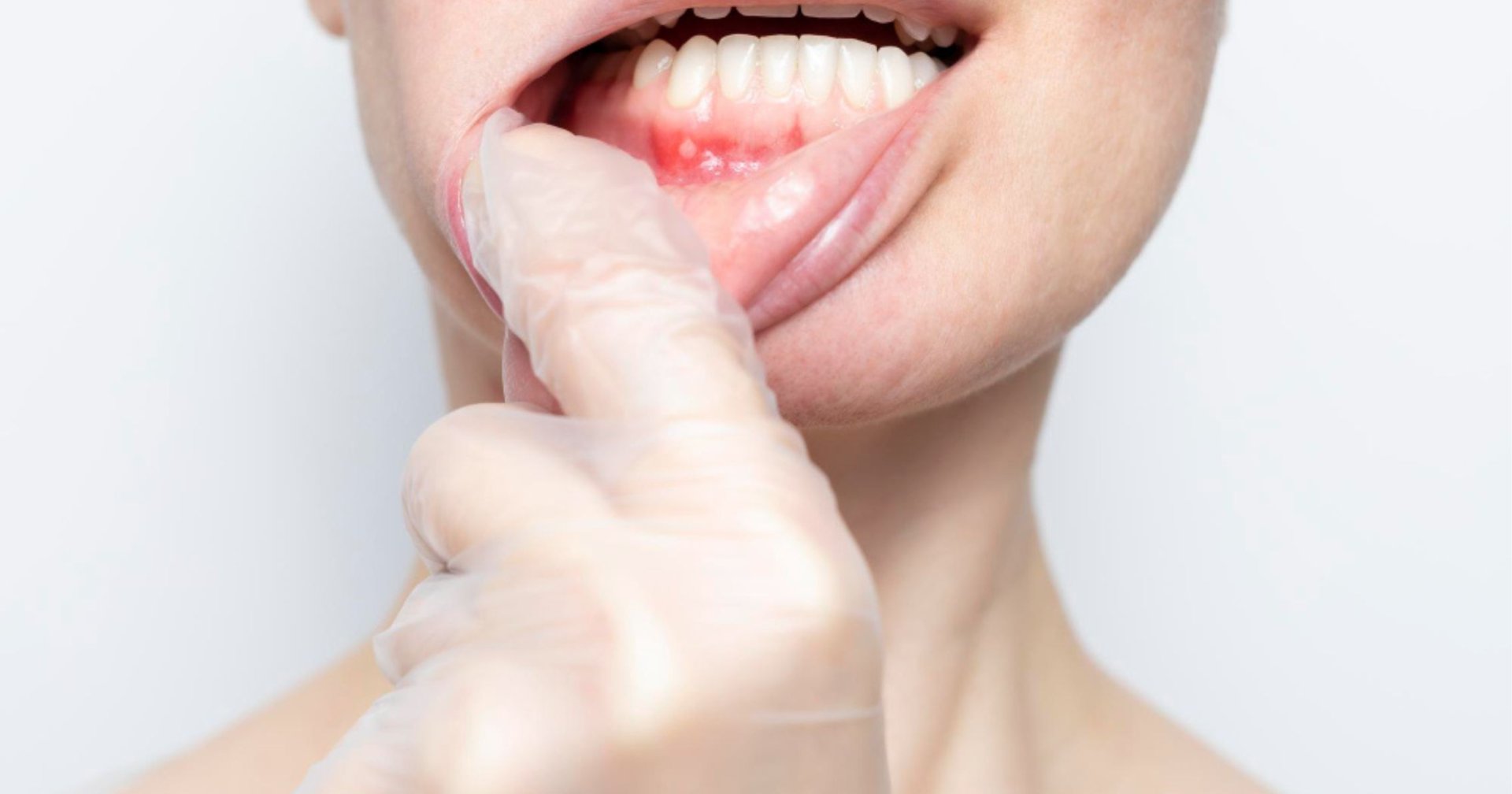
A typical mouth ulcer — the small, round sores that appear on the inner cheek, gum, or tongue — starts as a tender spot, opens within a day or two, and then heals gradually from the edges inward. Minor irritation (a bitten cheek, a sharp tooth edge, acidic food), stress, and nutritional factors are among the triggers. Saltwater rinses, topical gels, and avoiding acidic or spicy food while it heals can ease discomfort, though nothing meaningfully speeds up healing beyond removing the original irritant if there is one.
That’s the pattern described above. This piece isn’t about that pattern — it’s about what it means when an ulcer doesn’t follow it.
Why the Timeline Matters
Two to three weeks is the threshold dental guidance uses for a mouth ulcer to be assessed rather than continuing to wait it out. This isn’t arbitrary — an American Dental Association clinical guideline (Urquhart et al., Journal of the American Dental Association, 157(3):224–234, 2026, DOI: 10.1016/j.adaj.2025.12.017) recommends evaluation for persistent oral symptoms, including a new ulcer, lasting more than 2 to 3 weeks. That threshold reflects how long an ulcer from a bitten cheek or minor irritant reasonably takes to resolve once the cause is no longer present.
An ulcer still there beyond that window means one of two things: either the original cause is still active (an ill-fitting denture or a sharp tooth continuing to rub the same spot, for example), or something other than a typical minor ulcer is involved. Both are worth identifying — the first because it keeps recurring until the irritant is addressed, the second because it needs a different kind of attention entirely.
What a Non-Healing Ulcer Can Point To
Ongoing irritation. A denture that doesn’t fit properly, a sharp or broken tooth, or an orthodontic appliance rubbing the same spot repeatedly can keep re-injuring the tissue before it has a chance to heal, making the ulcer look like it isn’t healing when the real issue is that it’s being repeatedly disrupted.
A larger (major) aphthous ulcer. Major aphthous ulcers are deeper and larger than the minor type, and can take several weeks to heal rather than one to two. These are a different, larger presentation of the same category of ulcer, but the extended healing time means they’re assessed the same way a persistent ulcer would be, just to confirm that’s what’s actually happening.
An underlying medical condition. Recurring or slow-healing ulcers are sometimes linked to conditions including inflammatory bowel disease, coeliac disease, or nutritional deficiencies (B12, iron, folate) affecting tissue healing more broadly, not just in the mouth. A dentist identifying this pattern is what can prompt a referral for further investigation elsewhere.
A medicine side effect. Certain medicines can affect healing or trigger ulcers directly, which is relevant if a non-healing ulcer appeared around the same time as a new prescription.
Something requiring further investigation, including oral cancer. This is one of several possible explanations, and it’s part of why the assessment matters rather than continuing to wait. An assessment works through the explanations above first — ongoing irritation, a larger ulcer needing more time, an underlying condition — before considering anything further.
A sore that doesn’t follow the usual pattern — persisting well beyond the typical healing window, with an irregular or hardened border, or one that doesn’t hurt the way a typical ulcer does — is what prompts that fuller assessment. This is why “still there after three weeks” is treated as a genuine threshold rather than a soft suggestion.
Signs That Raise the Priority
Alongside simply persisting beyond the usual window, certain features are part of what a dentist looks for during assessment:
- An irregular, raised, or hardened border, rather than the smooth, defined edge of a typical ulcer
- A sore that doesn’t hurt the way you’d expect, or is painless despite its size
- Bleeding without being touched
- Location on the floor of the mouth, under the tongue, or on the side of the tongue — areas that carry a different level of attention than the inner cheek or lip
- Occurring alongside other risk factors, such as tobacco or heavy alcohol use
None of these features confirm anything on their own — they’re part of what an exam considers together, not a checklist to self-diagnose from. The point isn’t to self-assess against this list and draw a conclusion; it’s to know that these are real reasons an assessment is worth doing rather than continuing to wait.
What Happens at the Assessment
An exam of the ulcer itself, its location, and the surrounding tissue is the starting point. Depending on what’s found, this may include checking for a physical cause (a sharp tooth, a denture issue) that can be addressed directly, or, where the ulcer doesn’t have an obvious explanation, a referral for further investigation, which can include a biopsy — a small tissue sample taken for analysis.
A biopsy doesn’t mean something serious has been found; it’s part of how a cause is confirmed either way.
Frequently Asked Questions
How long is too long for a mouth ulcer to heal?
Two to three weeks is the threshold dental guidance uses for assessment (per an ADA clinical guideline, Journal of the American Dental Association, 2026). A typical minor ulcer resolves well before that; one still present beyond it is worth having checked rather than continuing to monitor.
Does a mouth ulcer that won’t heal mean I have cancer?
No — an assessment for a non-healing ulcer works through the more usual explanations first, such as ongoing irritation from a denture or tooth, or a larger ulcer that simply needs more time to heal. Persisting beyond the usual window is one of the reasons a fuller assessment is done, ruling out other possible causes — oral cancer included — rather than assuming that’s what’s happening.
Can a denture or broken tooth cause an ulcer that won’t heal?
Yes — if something is repeatedly rubbing or irritating the same spot, the tissue doesn’t get the chance to heal even if the underlying ulcer itself isn’t unusual. Addressing the source of irritation is what allows it to resolve.
Should I wait longer if the ulcer doesn’t hurt as much as it used to?
Reduced pain on its own isn’t a reliable sign that healing is progressing normally — some ulcers that need assessment are less painful than a typical one, not more. The timeline and appearance matter more than pain level alone.
What should I do if I have a mouth ulcer that hasn’t healed after three weeks?
Book an assessment rather than continuing to wait. Bring along any relevant details — when it appeared, whether anything in your mouth might be irritating it, and any changes in medicine — since these help identify the cause.
Persistent Mouth Ulcers Management in Thornton
If you have a mouth ulcer that hasn’t healed after two to three weeks, or doesn’t look or feel like a typical ulcer, it’s worth having it assessed rather than waiting longer.
At Thornton Dental, we welcome patients from Thornton, Maitland, East Maitland, Metford, Beresfield, and the surrounding areas.
Call us on (02) 4966 2996 or book online. Visit us at Thornton Shopping Centre, Shop 30/1, Taylor Ave, Thornton.
Any surgical or invasive procedure carries risks. Before proceeding, consider seeking a second opinion from an appropriately qualified health practitioner.