
Dental Bridges: When They Are the Right Fix for a Missing Tooth
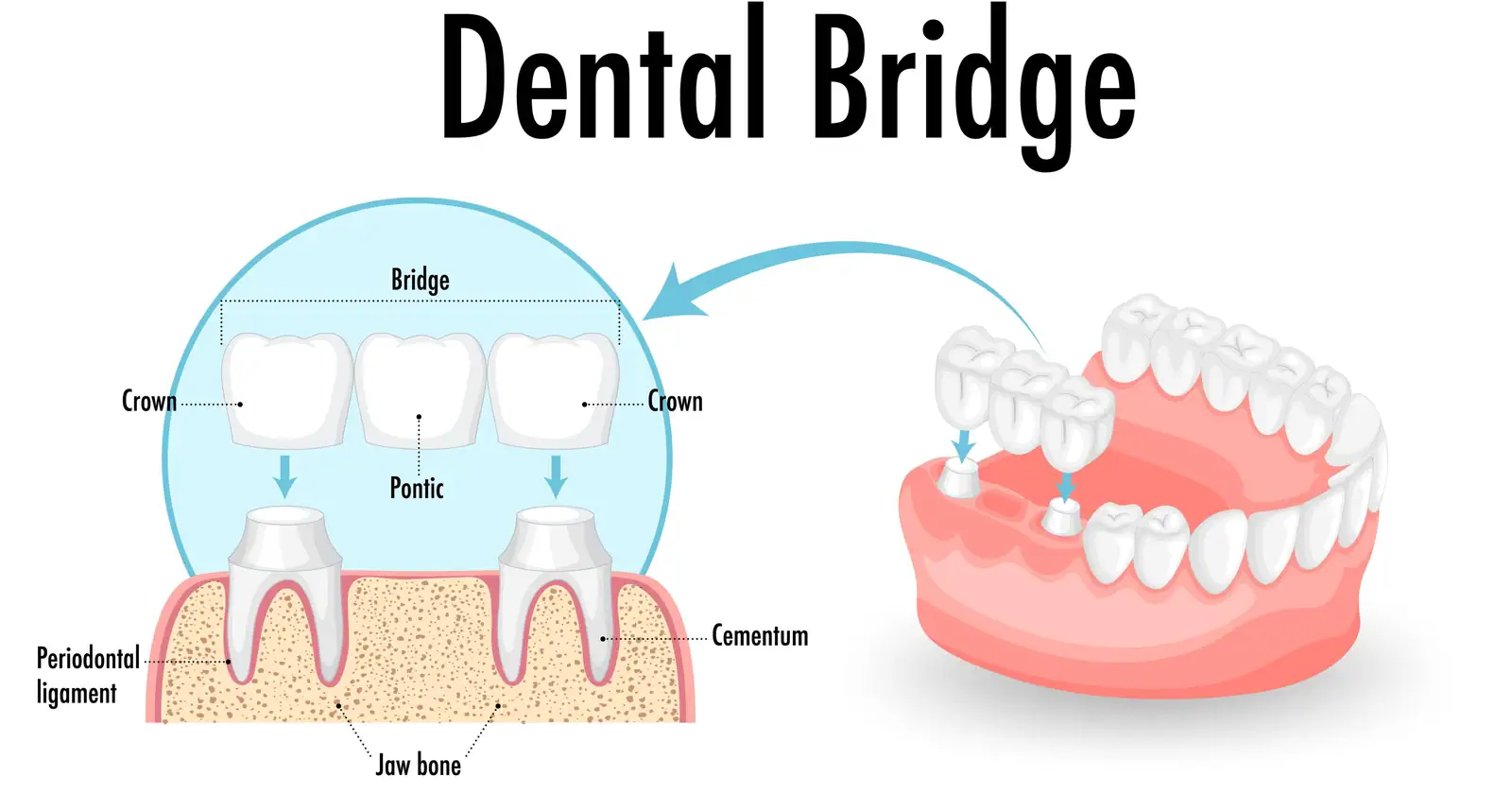
A dental bridge is one of several established ways to replace a missing tooth, and whether it’s the right one depends on your specific situation rather than being a default choice. This guide covers what a dental bridge actually involves, the different types, how it compares to an implant, and what affects how long one tends to last.
What a Dental Bridge Is
Think of a dental bridge as literally that: a span holding a false tooth, called a pontic, in place across a gap by attaching it to the natural teeth standing on either side. Those supporting teeth, known as abutment teeth, are shaped to hold crowns, which the pontic is then attached to, bridging the space where the missing tooth used to be. The result is a fixed restoration that isn’t removed day-to-day, unlike a removable denture.
Types of Dental Bridges
Not all bridges are built the same way, and which type suits a given case depends on the condition of the surrounding teeth and where in the mouth the gap is.
Traditional (fixed) bridges use a crown on each side of the gap to anchor the pontic, and are the most common type when there are healthy teeth on both sides of the missing tooth.
Cantilever bridges take the opposite approach, relying on a crown fixed to just one neighbouring tooth rather than one on each side, which comes up when only a single tooth sits next to the gap.
Maryland (resin-bonded) bridges skip full crowns altogether, instead bonding a thin metal or porcelain wing to the back of each neighbouring tooth. Less of the natural tooth is touched this way, but the trade-off is a bond that can hold up less reliably than a crown does in spots where chewing puts real force through the bite.
Implant-supported bridges are anchored by implants placed in the jawbone rather than by the natural teeth on either side, which avoids altering adjacent teeth altogether but involves a different treatment process, covered below.
Bridge vs Implant
These are two different approaches to replacing a missing tooth, and neither is automatically the better option for every situation. A traditional bridge relies on the teeth next to the gap, which need to be shaped to hold crowns, a process that removes some of the natural tooth structure permanently, even if those teeth were otherwise healthy. An implant doesn’t involve the neighbouring teeth at all, but requires adequate bone at the site, a surgical placement, and a healing period before the replacement tooth is fitted, generally making the overall timeline longer.
Which approach suits a particular case depends on factors including the condition of the adjacent teeth, how much bone is available, budget, and how long the patient is willing to wait for treatment to be completed. This is a conversation to have directly with your dentist rather than a decision to make from general information alone.
When a Bridge Is Generally the Right Fix
A bridge is often considered a reasonable option when the teeth on either side of the gap already need crowns for other reasons, since the bridge can address both issues at once. It’s also sometimes preferred by patients who want to avoid surgery, don’t have enough bone for an implant and aren’t pursuing grafting, or need a solution over a shorter overall timeframe than an implant typically allows. As with any treatment decision, this depends on an individual assessment rather than a general rule.
The Process of Getting a Dental Bridge
Getting a bridge generally starts with an assessment of the gap and the condition of the teeth that would support it. If a traditional or cantilever bridge is suitable, the abutment teeth are reshaped to accommodate crowns, which involves removing a layer of the tooth’s outer structure.
This step is irreversible, which is part of why the condition of those teeth matters so much in deciding whether a bridge is the right approach. An impression is then taken, a temporary bridge is generally fitted while the permanent one is made, and the final bridge is fitted and adjusted once it’s ready.
How Long Does a Dental Bridge Last?
Many bridges last a decade or more with consistent care, though this varies considerably between patients and isn’t something that can be guaranteed for any individual case.
Factors that affect how long a bridge lasts include how well it’s cleaned day to day, the health of the supporting teeth underneath the crowns, the amount of force placed on it from biting and grinding, and general wear over time. A bridge that isn’t cleaned thoroughly underneath is more likely to run into problems with the supporting teeth, which can shorten its effective lifespan regardless of how well the bridge itself was made.
Cleaning Under a Bridge
Because the pontic sits against the gum and connects to crowns on either side, ordinary floss can’t pass through the area the way it does between natural teeth. A few tools are commonly used instead:
- Floss threaders or a threading floss product, which allow floss to be guided underneath the pontic.
- Interdental brushes, small brushes designed to clean around and underneath the bridge.
- Water flossers, which aim a thin stream of water at the gaps and tight corners floss struggles to reach, flushing out plaque and trapped food as they go.
Consistent cleaning under a bridge matters more than it might seem, since plaque buildup in this area can lead to decay in the supporting teeth or gum disease, both of which can affect the bridge’s stability over time even if the bridge material itself hasn’t changed.

Dental Bridge Cost
What you’ll pay comes down to a handful of variables: which type of bridge is used, how many teeth it needs to replace, the materials chosen, and whether the teeth on either side need work of their own before the bridge goes in. Because these factors vary so much between cases, a general figure isn’t a reliable guide to what your specific treatment would cost. An itemised quote following an assessment is the way to get an accurate picture.
Risks and Considerations
As with any dental treatment, a few things are worth knowing before deciding on a bridge:
- Preparing the abutment teeth is irreversible. Once enamel is removed to fit a crown, that tooth will always need a crown or similar covering going forward.
- Decay or gum disease can develop under a bridge if cleaning isn’t kept up, potentially affecting the supporting teeth and the bridge’s stability.
- A bridge may eventually need replacement or repair, and how long that takes varies between patients as outlined above.
- The supporting teeth carry additional load once they’re anchoring a bridge, which is a consideration if those teeth are already compromised.
These are worth discussing directly with your dentist as part of deciding whether a bridge, an implant, or another option is the right fit for your situation.
FAQ
How long does a dental bridge last?
Many bridges last a decade or more with consistent care, though this depends on factors including oral hygiene, the health of the supporting teeth, and biting forces. It varies between patients and isn’t something that can be guaranteed.
Is a dental bridge or an implant better?
Neither is automatically the better choice. A bridge uses the neighbouring teeth for support, which involves permanently reshaping them, while an implant avoids this but requires adequate bone, surgery, and a longer overall timeline. Which suits you depends on your individual situation.
How much does a dental bridge cost?
This depends on the type of bridge, how many teeth are involved, the materials used, and whether the supporting teeth need extra work first. An itemised quote after an assessment is the reliable way to know the cost for your case.
How do I clean under a dental bridge?
Ordinary floss can’t pass under the pontic the way it does between natural teeth, so tools like floss threaders, interdental brushes, or a water flosser are generally used instead to keep the area clean.
Does getting a dental bridge hurt?
Local anaesthetic is used to manage discomfort while the abutment teeth are being prepared, and individual experiences of comfort during and after treatment vary. Some sensitivity while adjusting to a new bridge is common in the days afterwards.
What happens to the teeth next to the gap if I choose a bridge?
They’re reshaped to hold crowns, which involves permanently removing some of their natural structure. This is one of the key differences from an implant, which doesn’t affect neighbouring teeth, and is worth weighing up as part of your decision.
Can a dental bridge be replaced if it fails?
In many cases, yes, though this depends on the condition of the supporting teeth underneath. Your dentist can assess this if a bridge is no longer functioning as it should.
Book a Consultation in Thornton
If you’re weighing up how to replace a missing tooth, a consultation is the way to understand whether a bridge, an implant, or another option is the right fit for you.
At Thornton Dental, we welcome patients from Thornton, Maitland, East Maitland, Metford, Beresfield, and the surrounding areas.
Call us on (02) 4966 2996 or book online. Visit us at Thornton Shopping Centre, Shop 30/1, Taylor Ave, Thornton.
Any surgical or invasive procedure carries risks. Before proceeding, consider seeking a second opinion from an appropriately qualified health practitioner.